F&B KG315 KRAKEN TL-PR Acoustic Line
30–2000 Hz Single-Driver Full-Range TL–PR Hybrid System
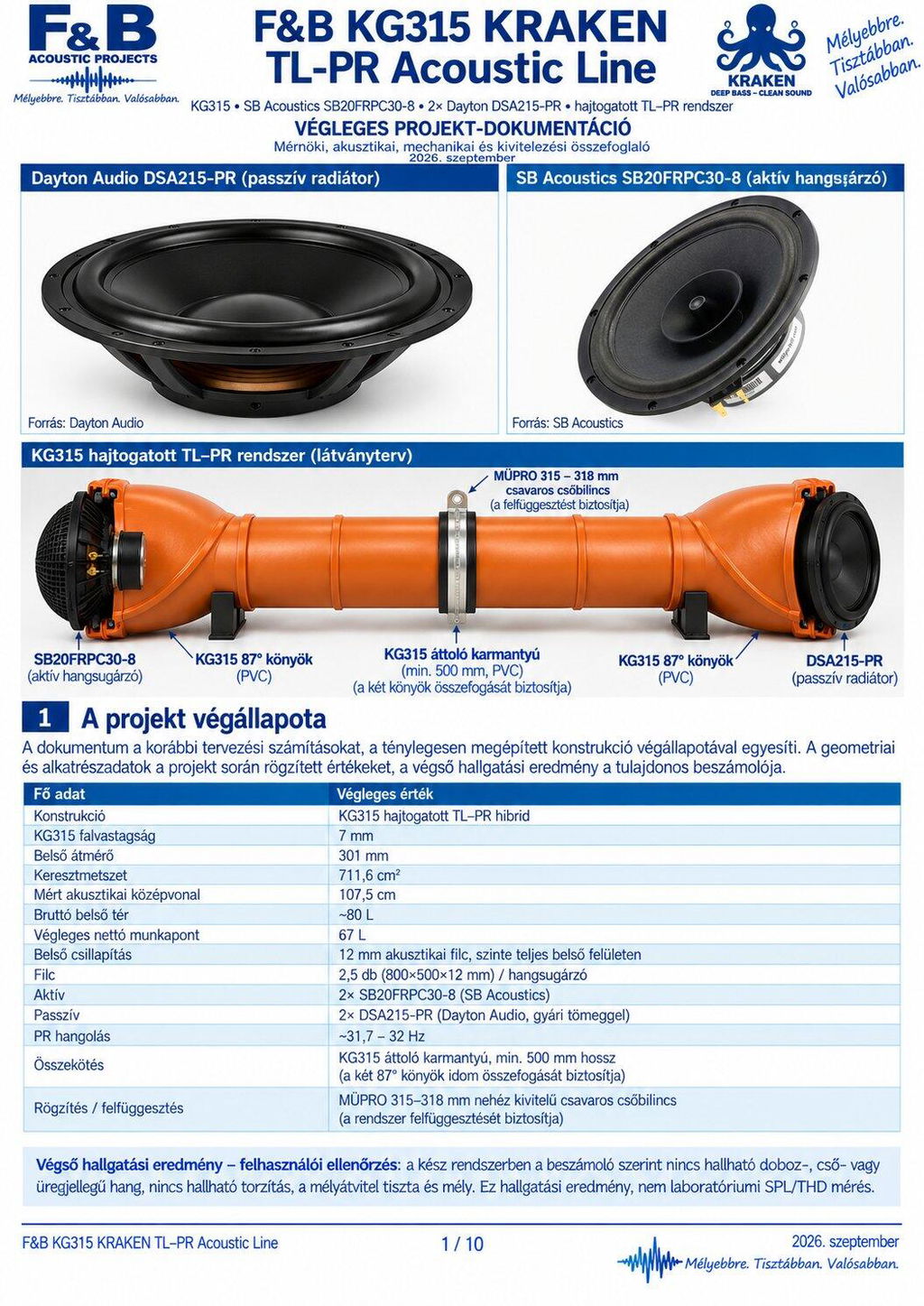
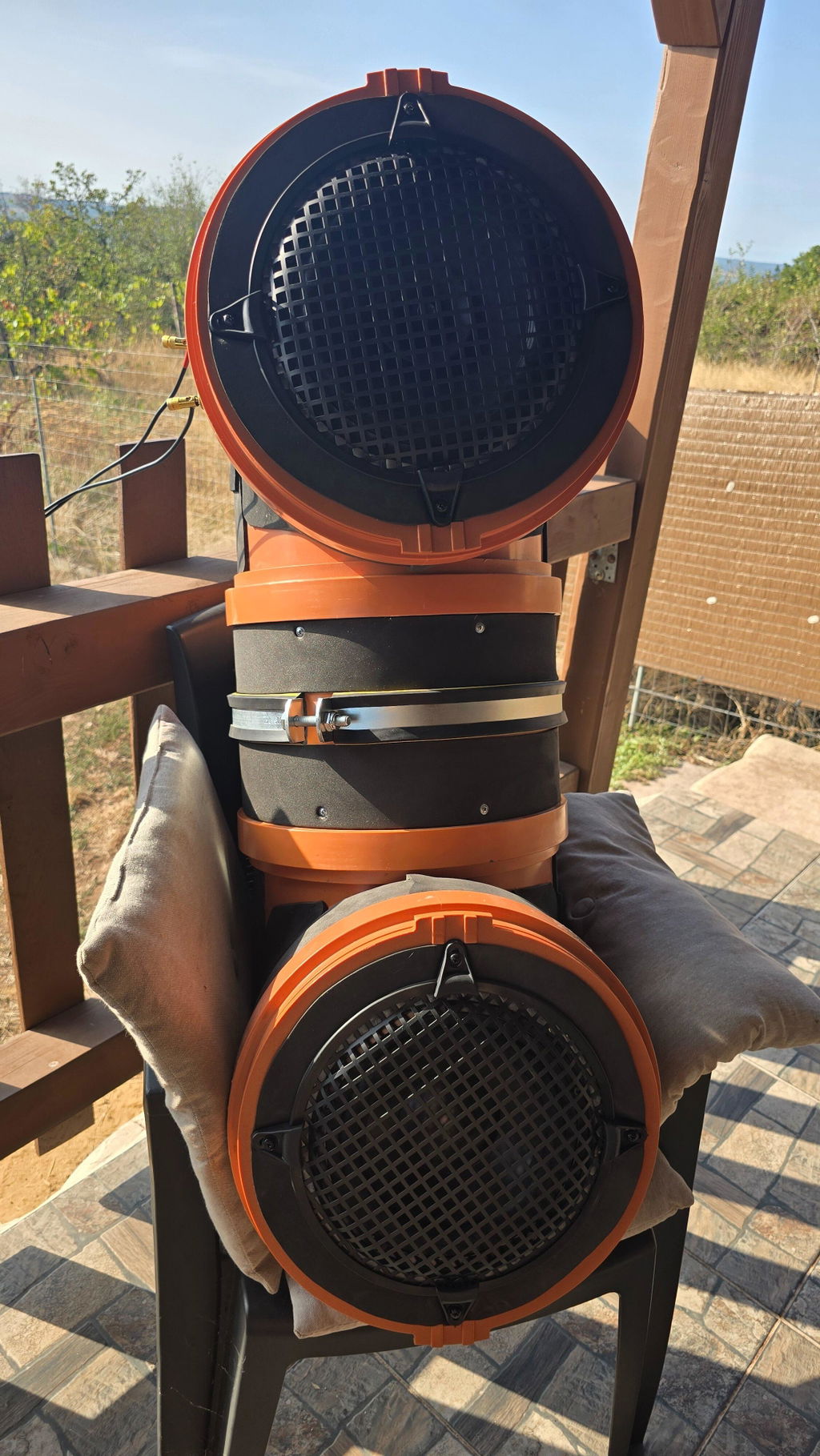
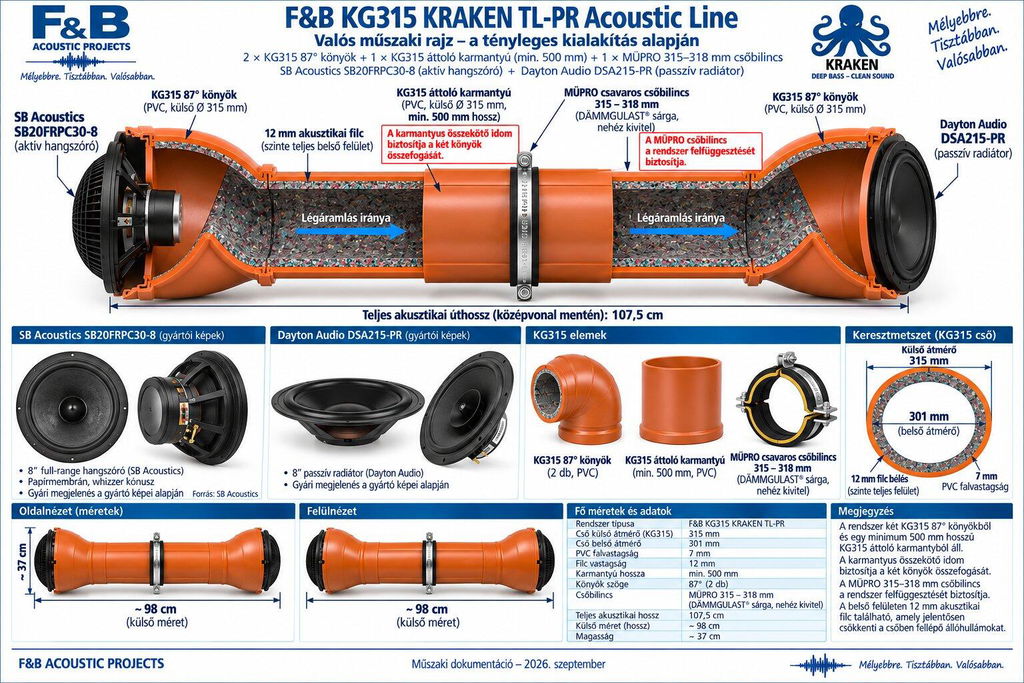
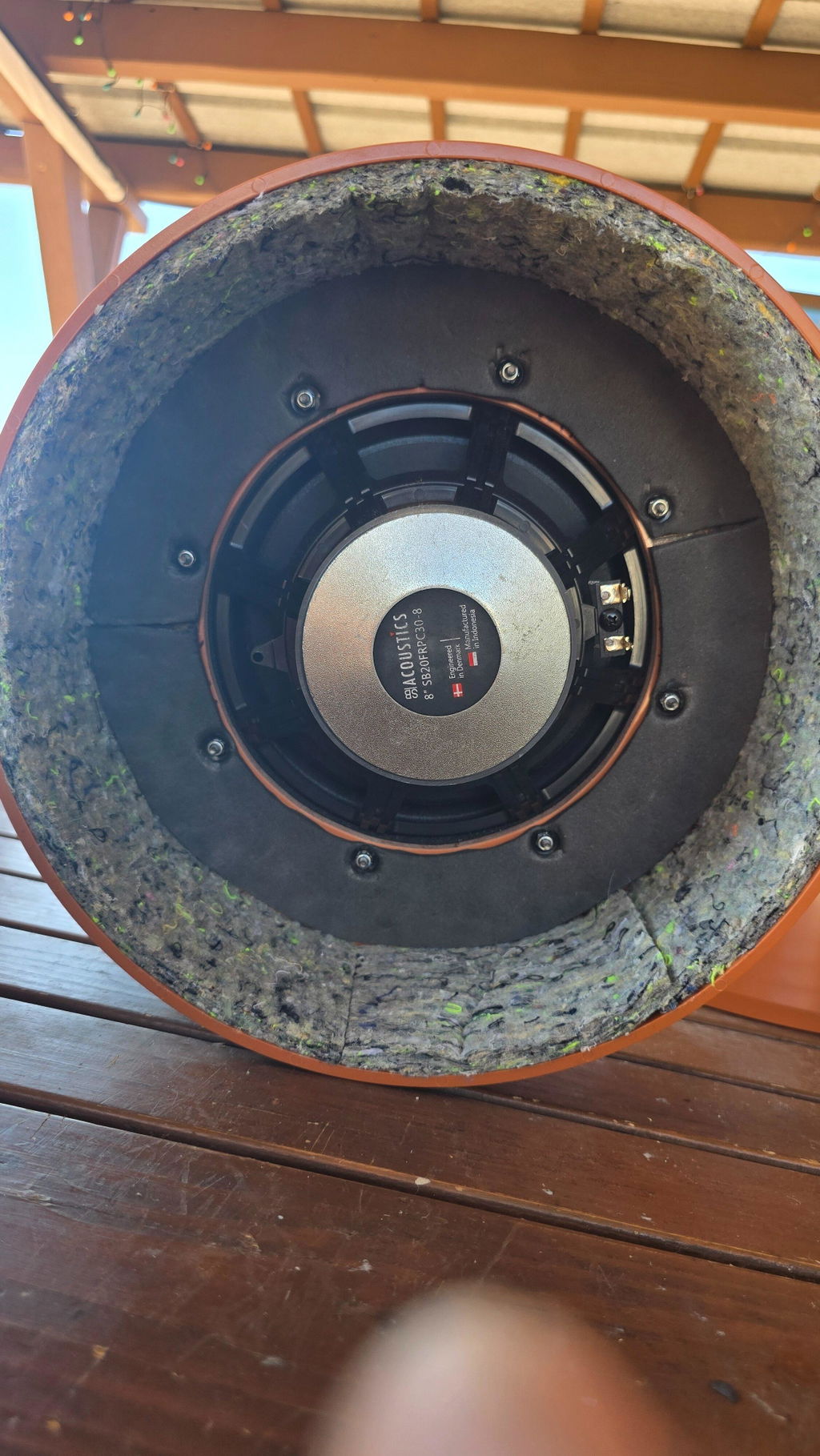
I designed and built a unique single-driver full-range TL–PR hybrid loudspeaker system using KG315 PVC fittings. The heart of the system is the SB Acoustics SB20FRPC30-8 full-range driver, complemented by a folded Transmission Line with a 107.5 cm acoustic centerline. For extended low-frequency performance, Dayton Audio DSA215-PR passive radiators are used.
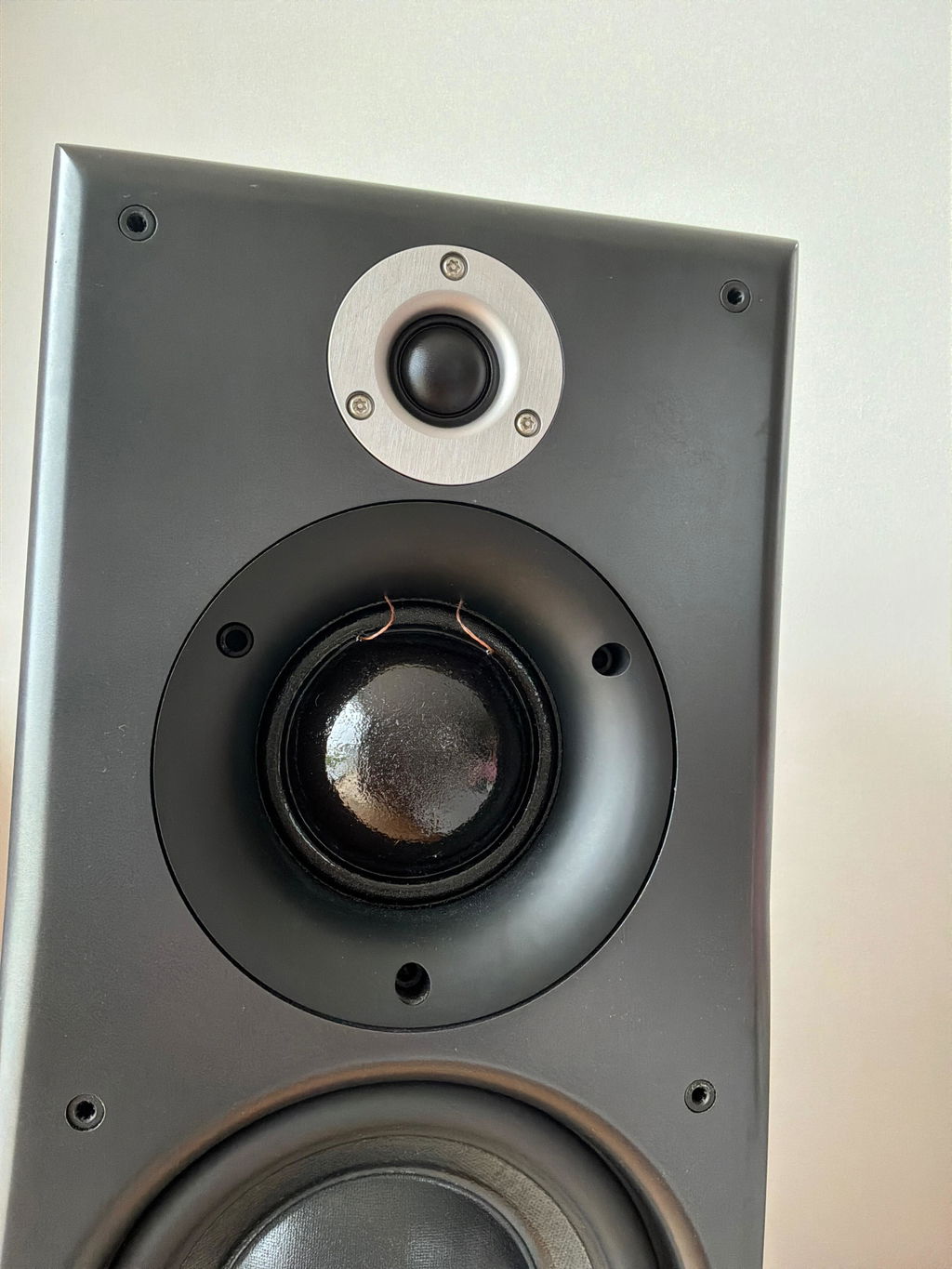
One of the most important characteristics of the design is that it uses no conventional crossover or cross-over network. This eliminates the need for the electrical crossover typically used in multi-way loudspeakers, avoiding the associated phase and time-alignment compromises around the crossover region.
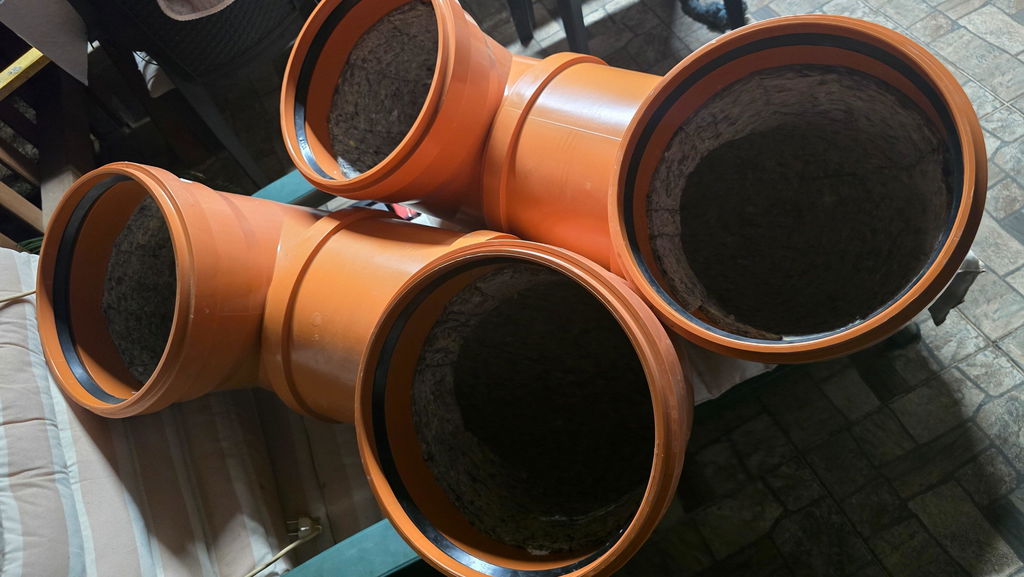
The large cross-sectional area and rigid KG315 PVC acoustic path, together with 12 mm internal acoustic felt damping and the carefully matched TL–PR system, create a design in which the low-frequency response extends well beyond what the SB20 could achieve on its own. The PR system is tuned to approximately 31.7–32 Hz, gradually taking over in the deepest bass region.
Main design objectives
natural and direct single-driver full-range reproduction
avoiding phase and crossover-related problems
a large, unobstructed midrange
deep and controlled bass response
reduced cabinet coloration and unwanted resonances
low coloration and a coherent sound character
a unified sound source based on a single main driver
The system has been designed for a usable acoustic operating range of approximately 30–2000 Hz, where the full-range character of the SB20 and the TL–PR low-frequency section complement each other.
This is not a conventional loudspeaker enclosure, but a custom-developed KG315 PVC Transmission Line–Passive Radiator hybrid system, designed to achieve the most coherent, natural and musical reproduction possible.
If anyone is interested in the detailed technical background of the project, I can provide the complete PDF documentation, including the detailed construction dimensions, acoustic and engineering calculations, TL–PR system analysis, and specifications of the components and materials used.